
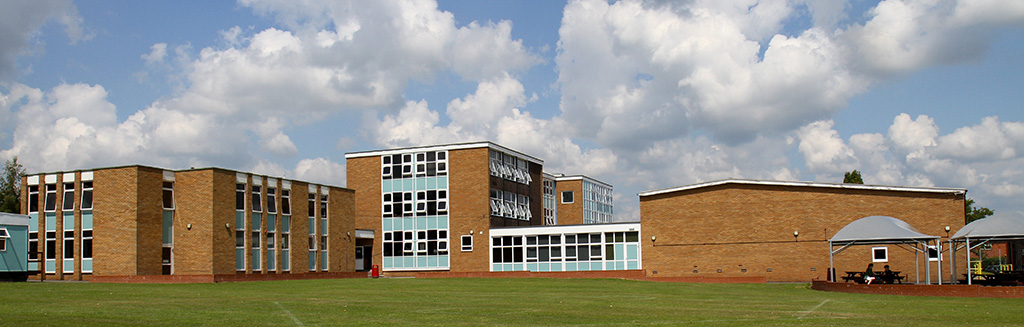
Arrangements for Admissions
Weobley High School supports the excellent work done in its contributory primary schools of Weobley, Staunton-on-Wye, Dilwyn, Canon Pyon and Credenhill. We value our links with these schools and collaborate with them closely on many aspects of our schools’ provision. Each term Mr. Williams meets with Primary School Headteachers in order to strive for seamless progression for year 6 students into year 7 and to arrange the many cross-phase activities. We also have a “taster Day” for year 5 so that they may familiarise themselves with Weobley High School even earlier. During the day pupils followed a normal timetable, guided by current students to help them gain a feel for the school.
Parents will have the opportunity to tour the school during a normal session and visit the school during an evening to see what facilities we have to offer on our Open Day when they will be able to speak to teachers and senior staff.
We are also pleased to receive a significant number of pupils from a much wider area, including the city of Hereford.
The transfer from primary school to secondary school can be an anxious time for pupils and parents. We operate an ‘open door’ policy for parents; any parent will be received at any time and shown around the school. A telephone call before such a visit is essential so that the Headteacher or Senior Staff can be available. Pupils who are due to join in September will be able to spend at least one more day with us in the Summer term, and will have lessons in their new tutor groups, meet with Learning Co-ordinator and Form Tutor and be supported by older students and prefects who will ease them into life at high school sensitively!
Admissions
Herefordshire Council, Children’s Services deals with admissions to Weobley High School and the planned admission number for Year 7 is currently 100 pupils.
ADMISSIONS ARRANGEMENTS FOR 2022/2023
OVERSUBSCRIPTION CRITERIA
Children with a Statement of Special Education Needs or an Educational, Health & Care Plan which names a particular school will be allocated places, after which places are allocated according to an agreed set of criteria, in strict order of priority.
Priority 1: Looked after children and previously looked after children who have since been adopted, or became subject to a child arrangements order or special guardianship order, including those children who appear (to the admission authority) to have been in state care outside of England and ceased to be in state care as a result of being adopted.
Priority 2 – Children who are on roll at a primary school that is hard federated (has a single governing body) with the preferred secondary school
Priority 3 – Children living within the defined catchment area* of the school;
Priority 4 – Sibling connection – Children who have a sibling** at the preferred school not only at the time of application but also when the child is due to start;
Priority 5 – Exceptional circumstances – Children with exceptional medical, social or compassionate grounds for admission and whose parents can show that entry to a particular school only is necessary for the wellbeing of their child. Parents are required to produce a medical certificate or other appropriate information preferably from an independent source.
Priority 6 – Distance*** – Children who live nearest to the school by the shortest available walking route.
Where, at any school, applications exceed the number of places, the priorities will be applied in the sequence indicated above, i.e. after children who either currently are or were in the ‘looked after’ system it will be children attending a hard federated primary school, then catchment area children, siblings, exceptional circumstances, then according to distance, each assessed as indicated above.
If the admission of the top four categories can be satisfied, but there are insufficient places for all out of area siblings, priorities will be decided first by reference to exceptional circumstances, then according to distance, with those living nearest to the school using the distance calculations outlined below *** taking priority
In case where distance is not the final deciding factor i.e. two applications are at exactly the same distance then the final tie breaker will be a lottery undertaken by an individual independent of the Children and Families directorate.
* In order to determine the relevant catchment area, the home address of a child is defined as the only or main permanent residential address, at the closing date for applications, where the child usually resides and which is the usual address of the parent/carer with main responsibility for the child. If arrangements are such that a child resides at two addresses for equal amounts of time, then parents must decide which address to use for admissions purposes.
Where more than one parent submits an application for a child, or where there is a parent not in agreement with the preferences, the Local Authority may not be able to process any application until agreement over the preferences is reached. Failure to ensure agreement prior to submission, may result in a delay in any application being processed and in some instances, where agreement cannot be reached we may not be able to proceed until a legal resolution has been sought and the courts determine which parent can make the final decision on schooling.
Copies of catchment area maps, if required are available from the LA, or can be viewed in schools. To find the catchment school for a postcode please visit https://www.herefordshire.gov.uk/schools-education/find-school
** A sibling connection refers to a brother or sister, half brother or sister, adopted brother or sister, step brother or sister, or a child of the parents/carer’s partner, and in every case the child should be living in the same family unit at the same address.
***Distance is measured by the shortest available walking route using a road and/or made up footpath using the nearest node on the transport network to the property point. The effect of this is to take you to the front door and not take into consideration other entrances (such as rear garden gates/ short cuts). This is particularly pertinent in a rural area like Herefordshire where rural properties can have multiple access points.
Further details can be obtained from:
Mrs D Skyrme, Children’s Wellbeing, Plough Lane Offices, Plough Lane, Hereford HR4 0LE
Telephone: 01432 260925